White Particles in Mortar
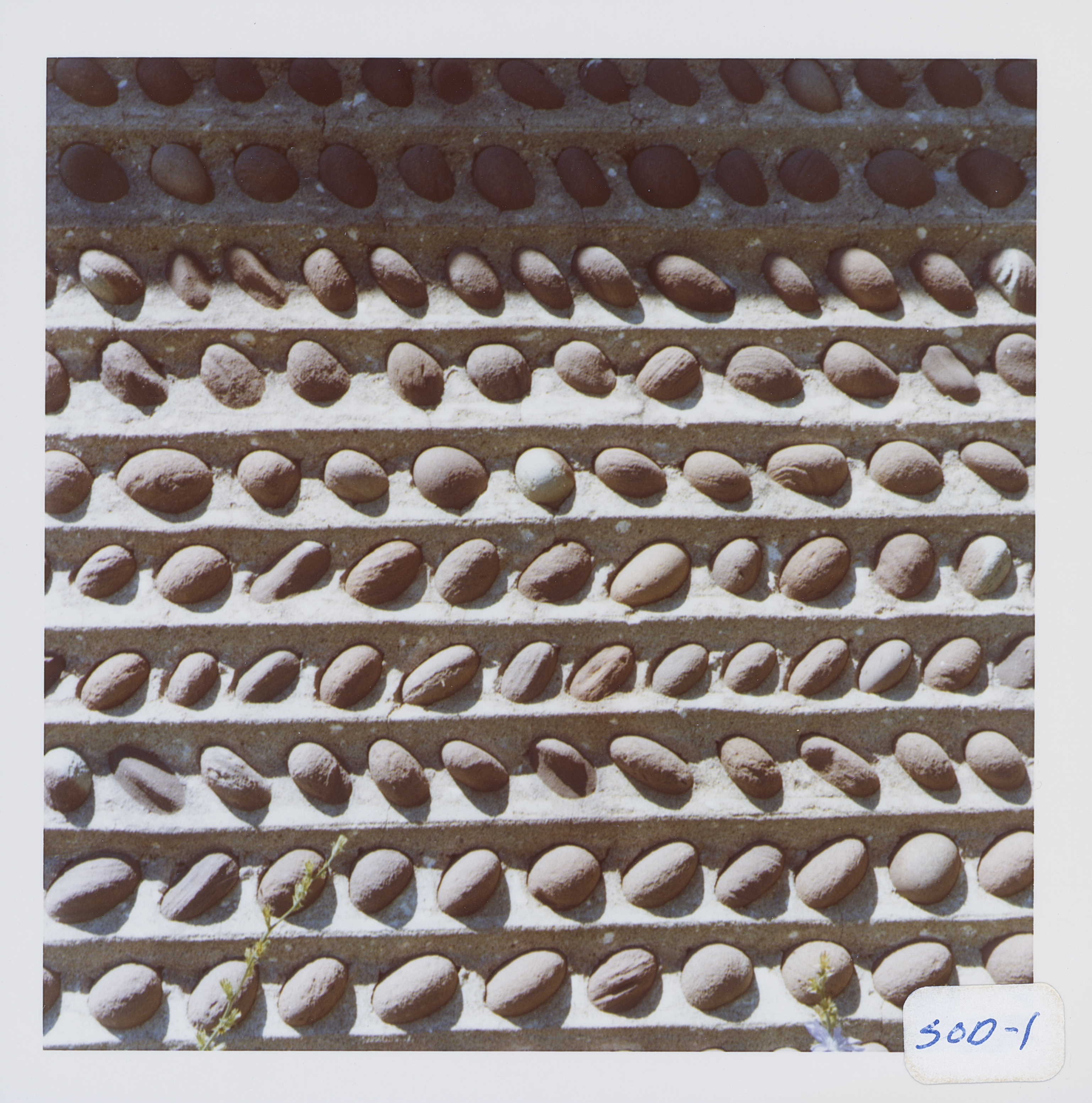
In a number of buildings, the mortar contains white particles of varying sizes. They are fairly common in several counties, but one is impressed by the frequency with which they are found in Wayne County. At one house the owner removed one of the larger particles so that it could be analyzed chemically. It turned out to be practically pure calcium carbonate (CaCo3).
In the preparation of mortar, limestone (CaCO3) is burned, releasing carbon dioxide and thus forming quick-lime (Ca0). This oxide is slaked with water, producing slaked lime (CaOH), This is then mixed with sand to prepare the mortar. When exposed to air, the slaked lime reacts with carbon dioxide in the air, and limestone (CaCO3) is formed.
The white particles are simply little lumps of slaked lime which did not get mixed with the sand. Therefore, they were converted to CaCO3 without dilution.
Roudabush Survey, Mortar Application, page 28
| 
Sod_1_4.jpg
White particles distributed randomly in the mortar. |